
How to Style a Tree Bookshelf with Books, Plants & Decor

News

How to Style a Tree Bookshelf with Books, Plants & Decor

A practical guide to styling a tree bookshelf with books, plants, ceramics, natural materials, and enough negative space to keep the sculptural form visible.

  • Bookshelf Decor
  • Interior Styling
  • Natural Wood Furniture
How to Style a Tree Bookshelf with Books, Plants & Decor Learn how to style a tree bookshelf with books, plants, ceramics, negative space, balanced visual weight, and practical placement. Tree Bookshelf Styling how to style a tree bookshelf, tree bookshelf decor, tree bookshelf styling ideas, how to decorate a tree bookshelf, bookshelf styling with plants, tree bookshelf with books, sculptural bookshelf styling

WRYDECO Journal · Editorial Note

Editorial focus: handcrafted wood furniture & natural-material interiors

· · Published by

A tree bookshelf already has more movement than a conventional rectangular bookcase. The branches, changing shelf lengths, and natural grain create their own visual rhythm, which means styling it successfully is less about filling space and more about deciding what to leave open.

If you are learning how to style a tree bookshelf, begin with function first: the books you actually use, the objects that matter, and the amount of empty space the sculptural structure needs to remain visible. Plants, ceramics, framed pieces, and natural materials can add warmth, but they should support the bookshelf rather than hide the reason you chose an organic form.

Styling at a Glance

Let the bookshelf stay visible

A calm composition usually works better than decorating every branch. Start with books, create breathing room, then add a small number of objects with enough scale to feel intentional.

01Start with books

Use the bookshelf for its main purpose before adding decorative layers.

02Protect negative space

Open shelves and visible branches keep the tree silhouette legible.

03Use fewer, larger objects

A restrained ceramic or plant often works better than many small accessories.

04Balance visual weight

Distribute books and objects across the whole structure rather than loading one side.

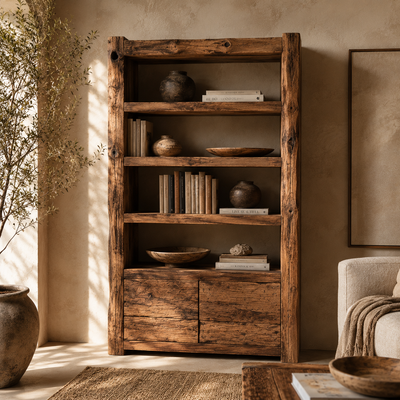
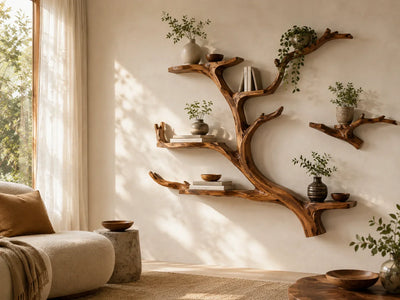
Handcrafted natural wood tree bookshelf styled with books, plants, and restrained decor in a warm interior
Show the finished balance: books first, decor second, and enough open space for the branch structure to remain visible.

Styling Principle 01

Start with negative space, not accessories

Before placing anything decorative, look at the bookshelf as a piece of sculpture. The gaps between branches, the direction of the trunk, and the changing shelf lengths are part of the composition. If every horizontal surface is filled, that structure quickly disappears behind objects.

Leave some shelves completely open and allow other shelves to hold only one group of books or one object. Negative space is not wasted storage in this context; it is what lets the organic silhouette remain readable from across the room.

Styling Principle 02

Use books to establish the main rhythm

Books should usually be the primary content. Start with the titles you actually want within reach, then group them into small vertical runs or low horizontal stacks according to shelf length and height.

Avoid forcing identical arrangements across every branch. A tree bookshelf naturally benefits from variation. One shelf may hold a compact vertical group, another a horizontal stack, and another remain partly open. The goal is a useful rhythm rather than perfect symmetry.

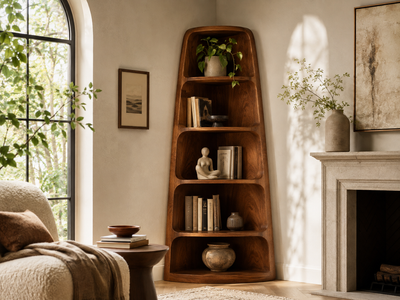
Close view of a tree bookshelf with vertical and horizontal book groupings while natural wood grain remains visible
Mix vertical and horizontal book groupings, but keep enough wood exposed to preserve the sculptural rhythm.

Styling Principle 03

Use plants as soft accents, not as a second canopy

A modest plant can introduce another natural texture and soften the relationship between wood, wall, and books. Choose scale carefully: one trailing or upright plant can be enough to connect the bookshelf with the room.

Keep moisture management practical. Use a stable container and a protective saucer or liner, and avoid allowing water to sit directly on a wood shelf. Also consider available light before using a living plant.

Natural wood tree bookshelf with one modest green plant, books, and open shelves in soft daylight
A plant should soften the composition without becoming large enough to hide the branches or create maintenance problems.

Styling Principle 04

Choose decorative objects with enough visual weight

Ceramics, stone objects, small framed pieces, or handcrafted vessels can work well because they introduce material contrast without competing with the wood grain. A few larger objects usually feel calmer than many small items scattered across every shelf.

Try to repeat materials or tones rather than repeating identical objects. One warm ceramic piece can echo a stone coffee table or plaster wall, while a dark framed object may connect visually with nearby metal or upholstery.

Styling Principle 05

Balance visual weight across irregular branches

Tree bookshelves are rarely symmetrical, so styling them like a conventional grid can feel forced. Instead, look at the bookshelf from several steps away and notice where the eye feels heavy.

A dense group of dark books on one side can be balanced by a lighter stack, a ceramic object, or more open space elsewhere. Balance does not require mirror symmetry; it requires the overall composition to feel stable even when the branches are different.

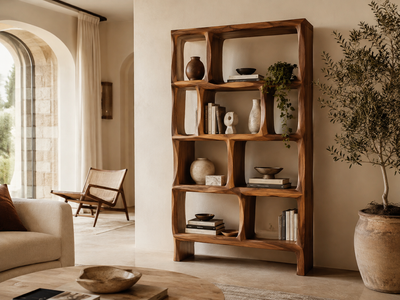
Tree bookshelf styling showing balanced visual weight across asymmetric branches with books and ceramics
Step back from the shelf while styling so you can judge the whole composition rather than one branch at a time.

Styling Principle 06

Let the color palette support the natural wood

Natural wood already brings grain, tone, and variation. Styling often works best when surrounding objects use a restrained palette: warm neutrals, muted book spines, black or deep brown accents, off-white ceramics, stone, linen, and a controlled amount of green.

This does not mean every object must match. The goal is to avoid a shelf where many unrelated saturated colors fight with the grain and branch form.

Styling Principle 07

Avoid the common styling mistakes that hide the bookshelf

The most common mistake is filling every shelf because empty space feels unfinished. Other problems include using too many tiny objects, placing several plants across the whole structure, balancing everything too symmetrically, or stacking items in ways that make frequently used books difficult to reach.

Also avoid placing unstable heavy objects high on the bookshelf simply because the upper branches look empty. Styling should respect the construction, shelf capacity, installation, and real use of the furniture.

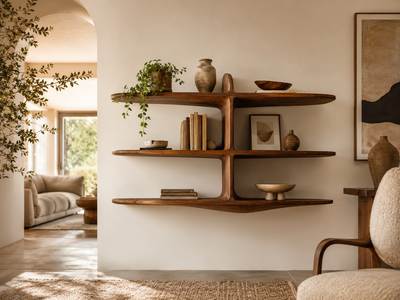
Minimal tree bookshelf styling with open shelves, accessible books, and restrained natural decor
A useful bookshelf should still look easy to live with: accessible books, stable objects, and clear open areas.

WRYDECO Perspective

A tree bookshelf should never disappear behind its styling

At WRYDECO, we see styling as the final layer of the furniture rather than the reason the furniture exists. The wood grain, branch structure, shelf rhythm, and relationship to the wall should remain visible after books and objects are added.

The strongest result feels personal but not crowded. Books show how the shelf is used, a few objects connect it to the room, and open space allows the natural form to continue doing visual work.

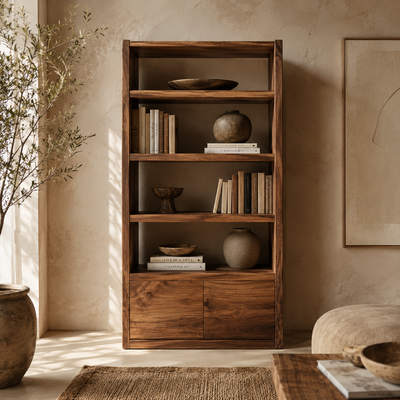
Finished handcrafted tree bookshelf with books, one plant, ceramics, and generous negative space in a refined living room
The finished composition should feel lived-in and useful while still allowing the tree form to lead.

Related Guides

Need room-by-room inspiration?

See how tree bookshelves can work in living rooms, bedrooms, kids’ spaces, reading nooks, home offices, and smaller interiors.

Explore Tree Bookshelf Ideas

Still deciding on scale?

Use the size guide to think through height, width, depth, shelf spacing, placement, and circulation.

Read the Tree Bookshelf Size Guide

Explore WRYDECO

Style around the wood, not over it

Explore handcrafted tree bookshelves designed to keep natural grain, branch structure, useful storage, and sculptural negative space visible.

Explore Modern Bookshelves

Frequently asked questions

How should I start styling a tree bookshelf?

Start with the books you actually use, then leave some shelves open before adding a small number of plants or decorative objects.

Should every shelf on a tree bookshelf be filled?

No. Open areas help the branch structure and natural wood remain visible and usually make the whole composition feel calmer.

What decor works well on a tree bookshelf?

Ceramics, stone objects, modest plants, small framed pieces, and a few larger decorative objects generally work well when they support rather than hide the bookshelf.

Can I put plants on a solid wood bookshelf?

Yes, but use stable containers and protect the wood from moisture. Plant choice should also match the actual light available in the room.

How do I balance an asymmetric tree bookshelf?

Judge visual weight rather than trying to create mirror symmetry. Distribute dense book groups, larger objects, and open space so the full silhouette feels stable.

Final Thoughts

Style less, then look again

A tree bookshelf rarely needs more decoration than a conventional bookcase. It usually needs less. Begin with useful books, preserve open space, add only a few objects with enough scale to matter, and step back often to judge the entire silhouette.

When the styling is working, you should still notice the wood, branches, and shape of the bookshelf before you notice the accessories.

Continue Reading

More from the journal

How to Care for Solid Wood Furniture: Cleaning, Humidity & Long-Term Protection July 07, 2026 How to Care for Solid Wood Furniture: Cleaning, Humidity & Long-Term Protection How a Tree Branch Bookshelf Is Made: From Raw Wood to Sculptural Furniture July 07, 2026 How a Tree Branch Bookshelf Is Made: From Raw Wood to Sculptural Furniture