


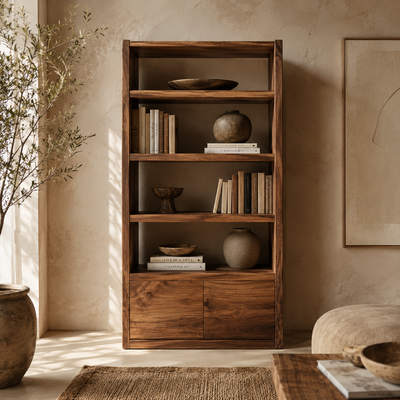
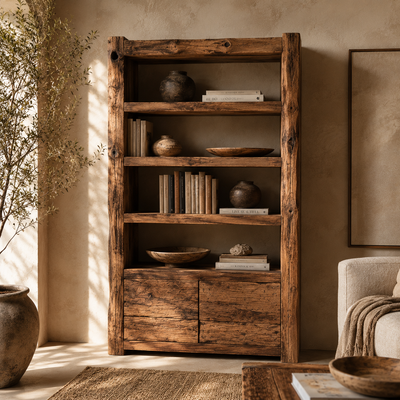
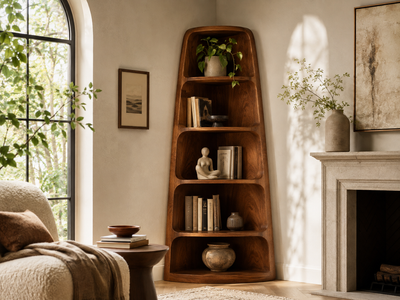
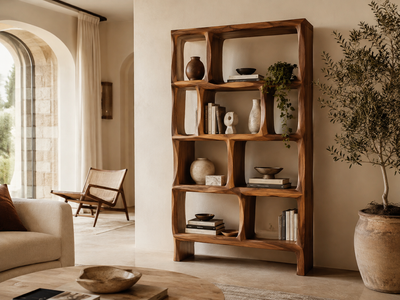
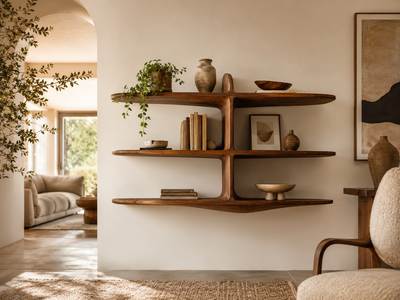
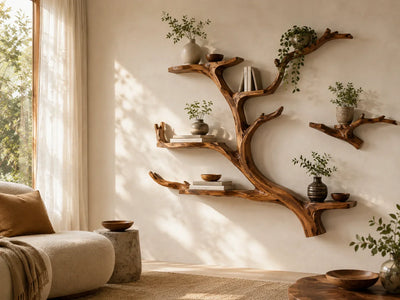


Tree bookshelves can be freestanding, mounted across a wall, or designed specifically for a corner. The best format depends on the available footprint, the wall conditions, the desired visual scale, and how often the furniture may need to move. This comparison separates those decisions so you can choose a form before comparing individual Wrydeco designs.
Quick takeaway: Choose a standing tree bookshelf when layout flexibility matters, a wall-mounted or floating tree bookcase when you want the floor to stay visually open, and a corner tree bookshelf when the room has an unused corner that can become storage and sculpture at the same time.
Freestanding Tree Bookshelves
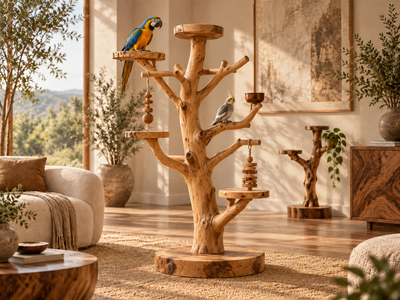
A freestanding or standing tree bookshelf behaves most like furniture. It gives the room a strong sculptural silhouette without committing the entire design to one wall. This format is useful when you want the option to rework a living room, office, bedroom, or reading corner over time.
In Wrydeco's catalog, standing bookshelf products appear as product types such as standing-bookshelf and as freestanding bookcase designs. They work best when the base, height, and shelf spread feel proportional to the room rather than only impressive in a product photo.
What to check
- Confirm the base footprint, total height, and deepest shelf projection before choosing the size.
- Leave walking clearance around nearby seating, doors, and pathways.
- Ask Wrydeco about anti-tip or anchoring needs for the exact product, especially for taller pieces or family spaces.
Wall-Mounted Tree Bookshelves
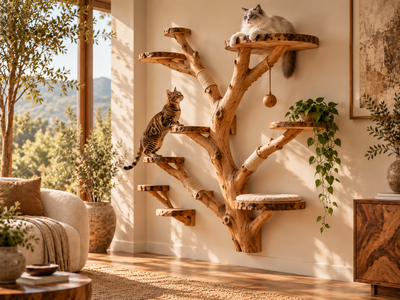
A wall-mounted tree bookshelf or floating tree bookcase uses the wall as part of the design. It can preserve floor space and make the branch form feel more architectural, but it also makes wall condition, mounting points, and hardware more important than they are for a purely standing piece.
Wrydeco product data includes wall-mounted and floating tree bookshelf signals, including products tagged as wall-mounted-tree-bookshelves and products in the floating-bookshelf group. Many Wrydeco pieces include hardware for wall fixing or anti-tip support, a full pack for customer assembly, and a setup video, but the exact hardware and installation method should still be confirmed for the design and custom size you choose.
What to check
- Measure the full wall span, shelf depth, outlet positions, trim, and nearby window or door clearance.
- Confirm wall condition, anchoring points, included hardware, and installation requirements before ordering.
- For onsite installation, Wrydeco can set the assembly schedule and placement, have the installer arrive at the appointment, then hand over the finished piece after installation.
Corner Tree Bookshelves
A corner tree bookshelf turns a room corner into a feature rather than leaving it empty. This format can be especially useful in compact rooms because the storage and branch silhouette sit where standard rectangular furniture often feels awkward.
Wrydeco has multiple products in the corner-bookshelf group. Corner designs may list sizes such as 49"W x 55"H x 8"D, 60"W x 60"H x 10"D, 75"W x 69"H x 12"D, or 90"W x 82"H x 12"D, depending on the exact product. Custom sizing can also be discussed through Wrydeco's Consultation form.
What to check
- Measure both walls of the corner, not only the side that looks more visible in photos.
- Check baseboards, outlets, vents, curtains, and door swings before choosing a wider canopy.
- Confirm whether the final piece is floor-supported, wall-supported, wall-mounted, or a mix of those conditions.
Compare Footprint, Installation and Flexibility
The three tree bookshelf types solve different room problems. A standing piece is usually the most flexible to reposition. A wall-mounted or floating piece can keep the floor open, but it needs more installation planning. A corner design can make better use of unused space, though it requires more careful measuring of both walls.
| Type | Best for | Main checks before ordering |
|---|---|---|
| Freestanding / standing | Flexible layouts, rooms that may change, statement storage that behaves like furniture. | Base footprint, height, depth, anti-tip guidance, and walking clearance. |
| Wall-mounted / floating | Feature walls, small rooms, open floor space, and branch forms that should feel built into the wall. | Wall condition, mounting method, included hardware, shelf projection, and installation plan. |
| Corner | Unused corners, reading nooks, nursery corners, and rooms where straight-wall furniture feels too bulky. | Both wall spans, corner angle, trim, outlets, door swing, and whether wall support is needed. |
What to check
- Compare footprint, installation effort, storage use, visual openness, and future flexibility together.
- Do not classify a product from its photo alone; read the product page and confirm the exact configuration.
- For custom dimensions, confirm the final width, height, depth, orientation, and installation method before production.
Choose the Right Form for Each Room
Start with the room problem, then choose the bookshelf type. If the wall is open but the room needs flexibility, consider a standing tree bookshelf. If the floor already feels busy, compare wall-mounted or floating tree bookshelves. If the unused space is a corner, a corner tree bookshelf may create the cleanest relationship between storage and architecture.
For care planning after purchase, use Wrydeco's care guide. For product comparison, browse Tree Bookshelves and Corner Bookshelf options with the same measurements in hand.
What to check
- Use freestanding forms for flexible rooms, wall-mounted forms for feature walls, and corner forms for unused corner space.
- Keep the tree silhouette visible instead of filling every shelf immediately.
- Ask Wrydeco which details change when the design is custom sized.
Compare tree bookshelf types for your space
Use your wall measurements, room layout, and installation needs to compare Wrydeco tree bookshelves before choosing a design.
Explore Tree BookshelvesFrequently Asked Questions
Are wall-mounted tree bookshelves better for small rooms?
They can be a good fit when the room needs open floor space, but they are not automatically better for every small room. Check wall condition, shelf projection, walking clearance, and the installation method for the exact Wrydeco product before choosing this format.
Do freestanding tree bookshelves need anchoring?
Some standing designs may still need anti-tip support or anchoring depending on height, footprint, placement, household use, and the final custom configuration. Confirm the requirement for the exact product instead of assuming every freestanding bookshelf installs the same way.
Will a corner tree bookshelf fit any corner?
No. A corner tree bookshelf still needs the right wall spans, depth clearance, outlet access, trim clearance, and door or window clearance. Measure both sides of the corner and compare those numbers with the product dimensions before ordering.

