




WRYDECO Journal · Editorial Note
Editorial focus: handcrafted wood furniture & natural-material interiors
· · Published by WRYDECO
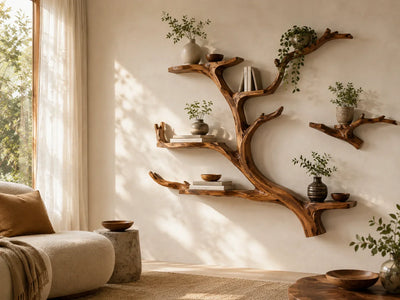
The best wood for a tree bookshelf is not determined by color alone. Grain, tone, available board or slab character, stability, strength, shaping behavior, finishing direction, and the visual weight of the final form all influence whether a species suits a particular design.
Oak, walnut, ash, maple, and other hardwoods can all create compelling tree bookshelves, but they do not produce the same atmosphere. Some emphasize grain strongly, some feel quieter, some create greater visual depth, and some work especially well when the design relies on sweeping branch forms or a lighter overall appearance.
Wood at a Glance
Choose the material for the form and the room
There is no universal best species. The strongest choice supports the bookshelf’s structure, grain direction, finish, visual weight, and the surrounding interior.
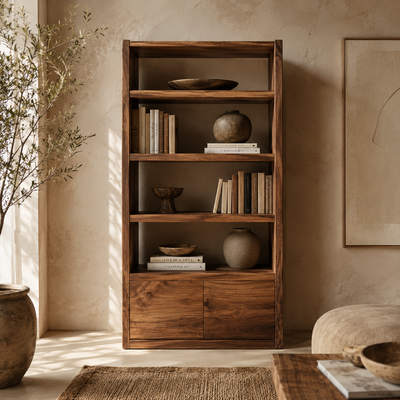
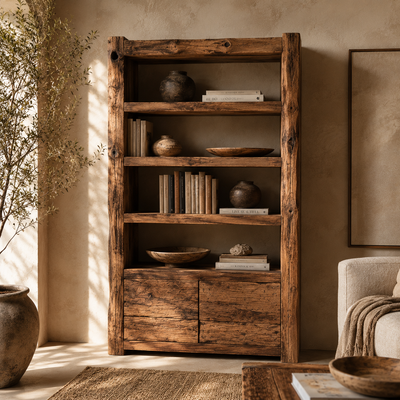
Visible grain, familiar warmth, and a strong natural furniture presence.
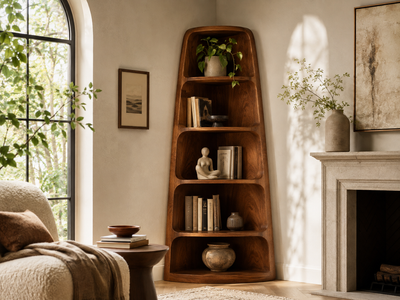
Deeper natural tone and a richer, more visually concentrated character.
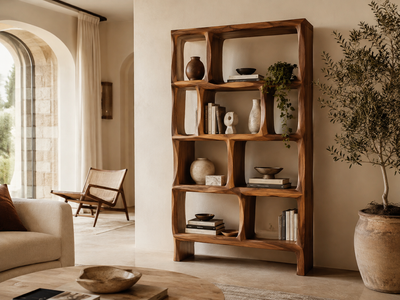
Lighter appearance with clear grain and an airy contemporary feel.
Quieter grain or different tonal directions can suit more restrained designs.

Material Guide
Compare more than the wood color
Begin with the visual role of the bookshelf. A large sculptural piece on a quiet plaster wall may need enough grain and tone to hold the room. A compact bookshelf beside a reading chair may benefit from a lighter species or a quieter finish.
Then consider the form itself. Branch transitions, shelf thickness, visible end grain, natural variation, and the relationship between solid sections all affect how the material will be experienced. The best species is the one that supports both the design and the room.
Wood Option 01
Oak gives the bookshelf visible grain and familiar warmth
Oak is often a strong choice when you want the wood itself to remain clearly present. Its grain can give shelves and branch-like components texture without relying on a dark finish, and its warm natural character works comfortably with plaster, linen, leather, stone, and many neutral interiors.
Because oak already has visual movement, it often benefits from restrained styling. Books and a few larger objects are usually enough; covering every surface can compete with the grain.

Wood Option 02
Walnut creates deeper tone and stronger visual gravity
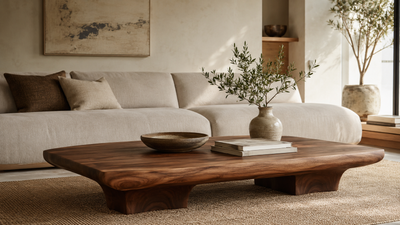
Walnut can make a tree bookshelf feel richer and more visually concentrated because the natural color is deeper than many lighter hardwoods. In a bright room, that contrast can turn the bookshelf into a strong focal point without adding decorative color.
The tradeoff is visual weight. A large dark bookshelf can dominate a compact or low-light room more easily than a lighter species. Give the silhouette enough wall area and negative space so the material feels deliberate rather than heavy.

Wood Option 03
Ash keeps the composition lighter while preserving visible grain
Ash can bring a pale, open feeling to an organic bookshelf while still showing a clear wood character. That makes it useful in Scandinavian-inspired, contemporary, coastal, or smaller interiors where the shelf should remain expressive without becoming visually dense.
A lighter species also reflects more ambient light, which can help the branch structure feel open against a warm neutral wall. The final result still depends heavily on finish, grain selection, and the scale of the piece.

Wood Option 04
Maple can create a quieter, cleaner wood expression
Maple is useful when you want the silhouette and craftsmanship to speak more loudly than the grain pattern. Its generally quieter visual character can support interiors that already contain several strong materials or where the tree form itself is the main statement.
Because the surface can read more uniformly, proportion, joinery, shelf rhythm, and finishing become especially important. A simple finish can help the bookshelf remain calm and architectural.

Finish Guide
The finish can change the material almost as much as the species
A clear or lightly toned finish tends to preserve the natural color and variation of the wood, while deeper finishes can add contrast and visual gravity. The goal should be to support the grain and furniture form rather than make the surface look artificially uniform.
Ask how the finish will behave in the actual room. Warm daylight, cool artificial light, dark flooring, pale plaster, and nearby upholstery can all change how the same wood tone is perceived.
Room Planning
Match the wood to the architecture and surrounding materials
In a bright room with pale walls, walnut can create deliberate contrast, while oak or ash may produce a softer tonal relationship. In a darker room, a lighter species can help the bookshelf remain legible without adding another heavy visual mass.
Also consider the materials already present. Stone, linen, leather, wool, metal, flooring, and nearby wood furniture all influence whether you want the bookshelf to blend, contrast, or become the main natural material in the room.

WRYDECO Perspective
Let the individual wood influence the final form
At WRYDECO, material selection is not simply choosing a species name from a list. Natural wood varies from board to board in grain, tone, knots, and local character. Those differences can influence which components become shelves, branches, supports, or visually prominent surfaces.
The most convincing tree bookshelf feels as though the material and the form were developed together. Species, grain direction, proportions, joinery, and finish should reinforce one another rather than being decided independently.
Related Guides
Want to see how material becomes furniture?
Follow the making process from wood selection and grain direction through shaping, joinery, sanding, finishing, and assembly.
See How a Tree Branch Bookshelf Is MadeNeed the full buying framework?
Compare size, wood character, placement, shelf use, room proportion, and custom sizing before choosing a tree bookshelf.
Read the Tree Bookshelf Buying GuideExplore WRYDECO
Choose the wood that supports the form
Explore handcrafted tree bookshelves shaped around natural grain, material character, useful shelf space, and the architecture of the room.
Explore Modern BookshelvesFrequently asked questions
What is the best wood for a tree bookshelf?
There is no single best species for every design. Oak, walnut, ash, maple, and other hardwoods can all work depending on the form, finish, room, and visual character you want.
Is oak good for a tree bookshelf?
Yes. Oak can provide clear grain, warm natural character, and a strong furniture presence while working with many interior materials.
Is walnut too dark for a bookshelf?
Not necessarily. Walnut can create a refined focal point, especially in brighter rooms, but its deeper tone can feel visually heavier in compact or low-light spaces.
Which wood gives a lighter tree bookshelf look?
Ash and other lighter-toned woods can create a more open visual effect, particularly when paired with a restrained finish.
Does finish matter as much as wood species?
Finish has a major effect on tone, contrast, tactile quality, and how grain appears. Species and finish should be considered together rather than as separate decisions.
Final Thoughts
Choose the wood for the bookshelf you want the room to experience
Oak, walnut, ash, maple, and other solid woods can all create beautiful tree bookshelves. The decision becomes easier when you stop asking which species is universally best and start asking what grain, tone, visual weight, and material presence the room needs.
The strongest result is not simply a good wood species. It is a believable relationship between the individual timber, the branch form, the finish, and the architecture around it.

