


WRYDECO Journal · Editorial Note
Editorial focus: handcrafted wood furniture & natural-material interiors
· · Published by WRYDECO
Tree bookshelves can share the same organic visual language while behaving very differently in a room. A freestanding piece occupies floor area and can create a strong furniture presence. A wall-mounted tree bookshelf uses the wall more directly and can keep the floor visually open. A corner design works with an architectural condition that standard shelving often ignores.
Understanding the main tree bookshelf types makes it easier to compare footprint, installation, storage, visual weight, flexibility, and the relationship between the bookshelf and the room. This guide focuses specifically on the differences between freestanding, wall-mounted, and corner tree bookshelves rather than repeating a general buying guide.
Tree Bookshelf Types at a Glance
Three ways to bring a tree form into the room
The best type depends on how much floor area you can give up, whether the wall can support the design, and how closely the bookshelf should respond to the architecture.
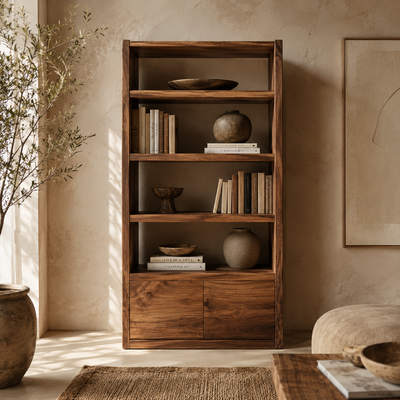
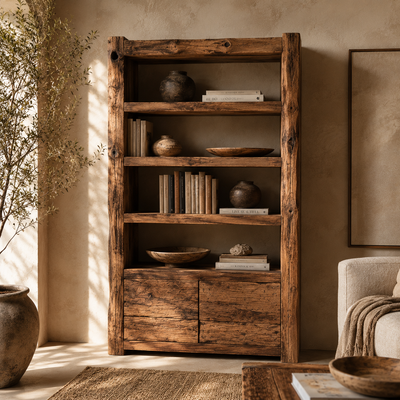
Strong furniture presence, more placement flexibility, and a visible base or footprint.
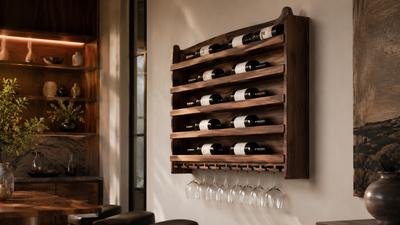
Uses the wall directly, preserves more visible floor area, and depends more heavily on correct installation.
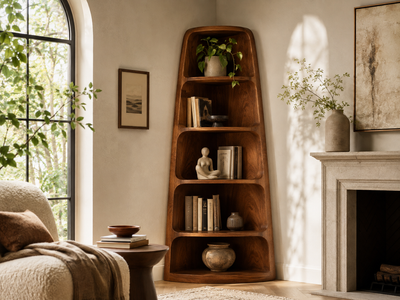
Responds to two wall planes and can turn an underused corner into a deliberate storage feature.

Type 01
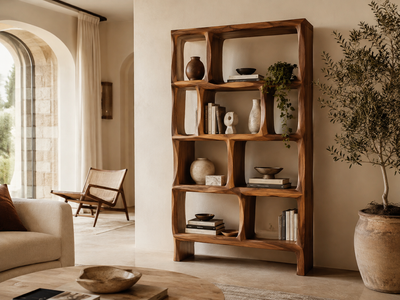
Freestanding tree bookshelves behave most like furniture
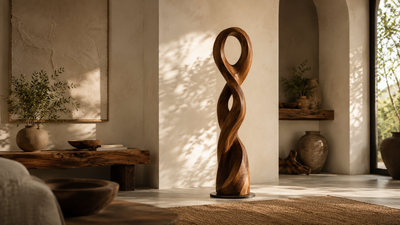
A freestanding tree bookshelf has a clear relationship with the floor. It may use a substantial trunk-like base, branching supports, or a wider lower structure that gives the piece enough visual and physical presence to stand independently.
The main advantage is flexibility. It can often be positioned on different walls or moved when the room changes. It also has a stronger furniture identity, which can be useful when the bookshelf needs to anchor a living room, reading room, or large bedroom.
The tradeoff is footprint. A freestanding design needs enough floor area and enough space around the base to avoid feeling heavy. In a compact room, the width and depth of the lower structure matter as much as the height.

Type 02
Wall-mounted tree bookshelves can feel more architectural
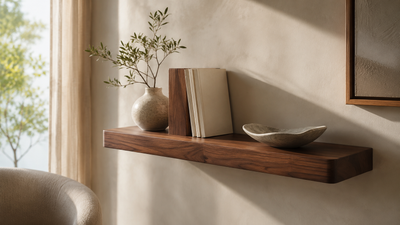
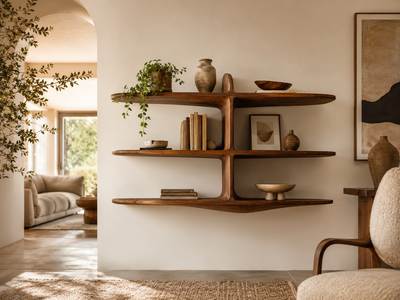
A wall-mounted tree bookshelf uses the wall as part of its structural and visual composition. The trunk, branches, or shelf supports can appear to grow across the wall while leaving more floor visible below.
This can make the room feel lighter, especially when the design has controlled depth and enough open space between shelves. It is particularly effective when the bookshelf is intended to become part of an otherwise quiet wall rather than read as a separate cabinet.
Installation becomes more important. Wall construction, fastening method, shelf loading, hardware, and the exact position of the bookshelf all affect how successfully a wall-mounted design works. The piece is also less flexible once installed.

Type 03
Corner tree bookshelves respond to two planes at once
A corner bookshelf can use an area that conventional linear shelving often handles awkwardly. Instead of treating the corner as leftover space, the design can allow branches or shelves to relate to both walls and create a more continuous composition.
This format can work well in reading corners, bedrooms, compact living rooms, or architectural niches where a full-width freestanding piece would occupy too much wall length. It can also create a stronger feeling of enclosure around a small reading area.
Corners are not automatically space-saving, however. The actual shelf depth, projection into the room, door swings, nearby windows, baseboards, and circulation should still be measured carefully.

Side-by-Side
Freestanding vs wall-mounted vs corner tree bookshelves
| Factor | Freestanding | Wall-mounted | Corner |
|---|---|---|---|
| Floor footprint | Usually highest | Can preserve more open floor | Depends on corner projection |
| Installation dependency | Lower, depending on design | Highest | Moderate to high |
| Placement flexibility | Highest | Lower after installation | Tied to a specific corner |
| Visual character | Furniture-like and substantial | Architectural and integrated | Site-specific and enveloping |
| Best fit | Rooms with enough open floor area | Walls that can support a fixed feature | Underused corners or reading zones |

Which tree bookshelf type suits which room?
In larger living rooms, a freestanding tree bookshelf can create enough visual weight to balance a sofa and coffee table. In compact apartments, a wall-mounted design may help preserve visible floor area. In bedrooms or reading corners, a corner bookshelf can use an architectural condition that might otherwise remain empty.
These are tendencies rather than rules. A narrow freestanding piece can work in a small room, while a large wall-mounted installation can dominate a compact space. Proportion, depth, circulation, and the amount of open wall around the bookshelf remain more important than the label.
Installation requirements change with the bookshelf type
Freestanding designs generally rely more on their own structure, although tall furniture may still require appropriate anti-tip or anchoring measures depending on the piece and environment. Wall-mounted bookshelves depend more directly on the wall and fastening system. Corner designs can involve one or both wall planes and may need especially careful alignment.
Whatever the type, installation should reflect the actual construction, wall condition, expected load, hardware, and maker instructions. A sculptural appearance does not remove the need for structurally believable support.
Custom Fit
Custom sizing matters most when architecture limits the obvious options
A standard freestanding piece may be too deep for a narrow room. A wall-mounted design may need to stop before a window or doorway. A corner bookshelf may need to work around baseboards, outlets, ceiling conditions, or an unusual wall angle.
In those situations, custom dimensions can be more useful than simply choosing a different type. Height, width, depth, branch projection, shelf spacing, and the relationship between the bookshelf and the room can all be considered together.

WRYDECO Perspective
The type should follow the architecture, not fight it
We see freestanding, wall-mounted, and corner tree bookshelves as different responses to space rather than three competing categories. The strongest choice is the one that gives the natural wood enough presence while respecting circulation, wall conditions, surrounding furniture, and the amount of visual weight the room can support.
Organic form becomes more convincing when it feels structurally and spatially inevitable. A branch should not turn simply because the style requires it. The bookshelf should grow out of the practical conditions of the room.
Related Guides
Need the full buying guide?
Our tree bookshelf buying guide covers size, wood character, placement, shelf use, room proportion, and custom sizing in more detail.
Read the Tree Bookshelf Buying GuideLooking for room inspiration?
See tree bookshelf ideas for living rooms, bedrooms, kids’ spaces, reading nooks, home offices, and smaller interiors.
Explore Tree Bookshelf IdeasExplore WRYDECO
Find the tree bookshelf format that fits your room
Explore handcrafted bookshelves shaped around natural wood, organic structure, useful shelf space, and the relationship between furniture and architecture.
Explore Modern BookshelvesFrequently asked questions
What are the main types of tree bookshelves?
The three most useful categories for room planning are freestanding, wall-mounted, and corner tree bookshelves. Individual designs can also combine characteristics from more than one type.
Is a wall-mounted tree bookshelf better for a small room?
It can preserve more visible floor area, but the overall width, depth, shelf projection, and circulation still matter. A compact freestanding piece can sometimes fit better than an oversized wall-mounted design.
Does a freestanding tree bookshelf need wall anchoring?
That depends on the specific construction, height, weight distribution, environment, and maker instructions. Tall furniture may require appropriate anti-tip or anchoring measures even when it is freestanding.
When does a corner tree bookshelf make sense?
It is useful when two wall planes can work together, especially in reading corners, bedrooms, compact living rooms, or spaces where a standard linear shelf would leave an awkward corner unused.
Can a tree bookshelf combine wall-mounted and freestanding elements?
Yes. Some designs can use a floor-supported trunk or base together with wall-fixed branches or shelves. What matters is that the structure, installation, and visual composition are resolved as one system.
Final Thoughts
Choose the type that gives the room the right relationship with the shelf
Freestanding, wall-mounted, and corner tree bookshelves are not simply three visual styles. They occupy space differently, require different installation decisions, and create different relationships with walls, floors, circulation, and surrounding furniture.
Start with the architecture and the footprint you can realistically give the bookshelf. From there, the right type becomes much easier to see.


