
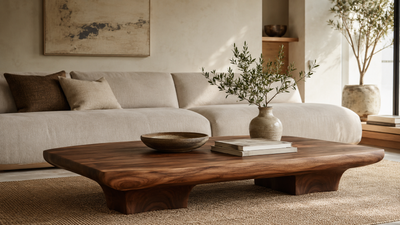
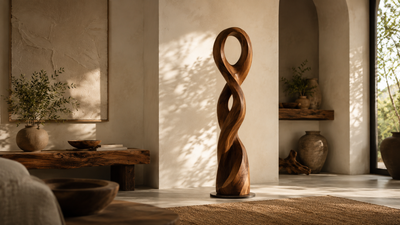


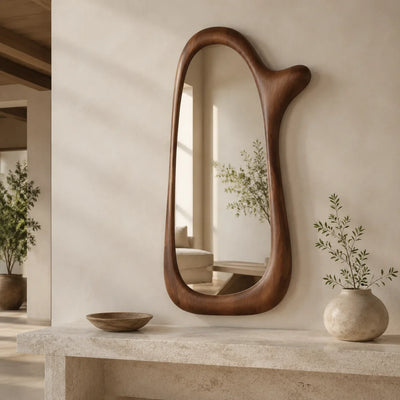

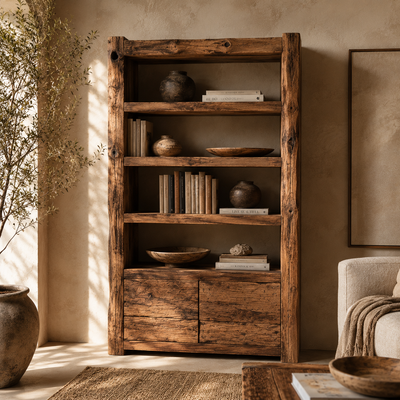
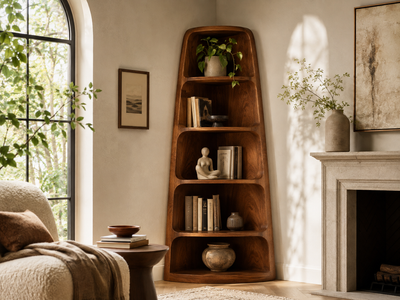
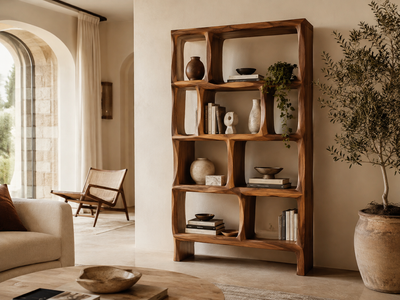
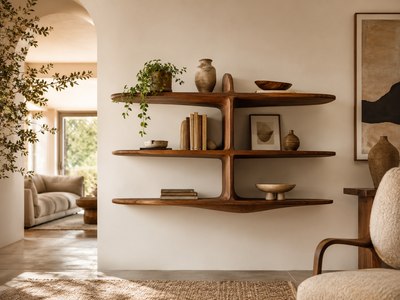
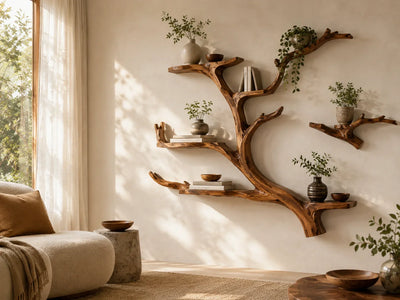


Floating shelves can look crowded quickly because every object is visible against the wall. The cleanest shelf styling usually begins with restraint: choose one visual anchor, vary height and shape, use books as structure and leave enough open area for the shelf itself to remain part of the design.
This guide shows how to style floating shelves without clutter while still keeping them useful. Use the ideas as a styling framework, then check the exact shelf depth, installation guidance and product-specific requirements before placing heavier objects.
Quick takeaway: Treat floating shelf decor as a composition, not a storage dump. Anchor the display, vary the silhouette, repeat a few materials and edit from across the room before adding anything else.


Choose One Visual Anchor
Start with one object that gives the shelf display a center of gravity. A ceramic vessel, framed art piece, small sculpture or meaningful object can work well because it gives the eye a place to land before smaller pieces are added.
The anchor should fit the shelf depth and leave room around it. On floating shelves, an oversized object can make the shelf feel crowded even when there are only a few pieces, so scale matters as much as the object itself.
What to check
- Choose the largest or most meaningful object first.
- Place the anchor slightly off center when the wall composition allows it.
- Keep empty wall and shelf surface visible around the object.
- Confirm the object fits the shelf depth and product-specific guidance.
Create Height and Shape Variation
Floating shelf styling becomes flat when every item has the same height, shape and spacing. Mix tall, medium and low forms so the shelf display feels collected rather than lined up.
Variation does not require many objects. A taller vase, a low bowl, a small plant and a quiet stack of books can create enough rhythm if the spacing is intentional.
What to check
- Combine vertical forms, low forms and small horizontal groupings.
- Repeat a limited color, finish or material across separated shelves.
- Avoid placing identical objects at perfectly even intervals.
- Leave at least one visibly open area so the shelves do not feel packed.
Use Books as Structure
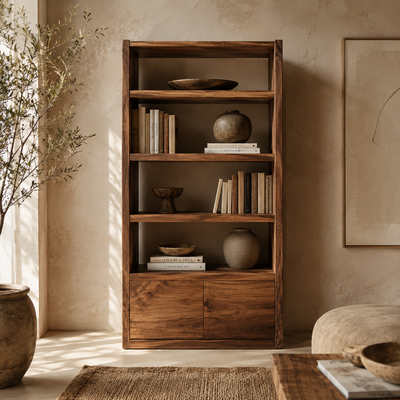
Books are useful styling tools because they create horizontal planes, lift small objects and add rhythm without requiring more decor. On floating shelves, smaller book groups usually read cleaner than long, dense rows.
Before placing large stacks or heavier objects, check the exact product guidance and installation condition. The goal of shelf styling is balance and usability, not testing how much the shelf can hold.
What to check
- Use short vertical groups or low horizontal stacks rather than filling every inch.
- Keep frequently used books easy to reach.
- Use book stacks to lift smaller ceramics or art objects when the scale feels low.
- Confirm product-specific guidance before adding heavier collections.
Add Personal Objects With Restraint
Personal objects make floating shelves feel lived in, but too many small pieces quickly become visual noise. Choose fewer items with clearer shapes, then give each one enough space to be seen.
Plants can soften the straight line of a shelf, but keep water, soil and moisture away from unfinished or sensitive wood surfaces. Follow the Wrydeco care guide for finish-safe cleaning and protection.
What to check
- Limit ceramics, plants, frames and keepsakes to the strongest pieces.
- Group small objects together instead of scattering them evenly.
- Protect the shelf surface from water, plant pots and abrasive bases.
- Remove one item whenever the display starts to feel busy.
Edit the Display From Across the Room
The final edit should happen from the place where the shelves are usually seen: the sofa, dining table, hallway or doorway. From that distance, clutter is easier to spot because small items merge together.
Step back, check the silhouette and remove anything that competes with the anchor. If the shelf is part of a made-to-order or custom-sized wall plan, Wrydeco can help through the Consultation form.
What to check
- Look at the shelves from the main viewing distance.
- Keep the wall composition balanced with nearby furniture and art.
- Remove pieces that hide the shelf line or make the wall feel crowded.
- Compare the final look with available floating shelves before choosing a size or finish.
Explore Wrydeco
Find floating shelves with room to breathe
Choose a solid wood shelf with the right scale, depth and finish, then style it with enough negative space to keep the wall calm.
Explore Floating ShelvesFrequently Asked Questions
How many items should go on a floating shelf?
There is no fixed number. Start with one anchor object, add one or two supporting pieces and leave visible open space. If the shelf looks busy from across the room, remove an item before adding more.
What looks good on floating shelves?
Floating shelves usually look best with a restrained mix of books, ceramics, small plants, framed art and meaningful personal objects. Vary height and shape while repeating a few colors or materials.
How do I keep shelves from looking cluttered?
Use fewer objects, group small pieces together, keep part of each shelf open and edit the display from the main viewing distance. Negative space is what keeps the shelf line and wall composition visible.


